What LED lighting for a growth chamber or phytotron?
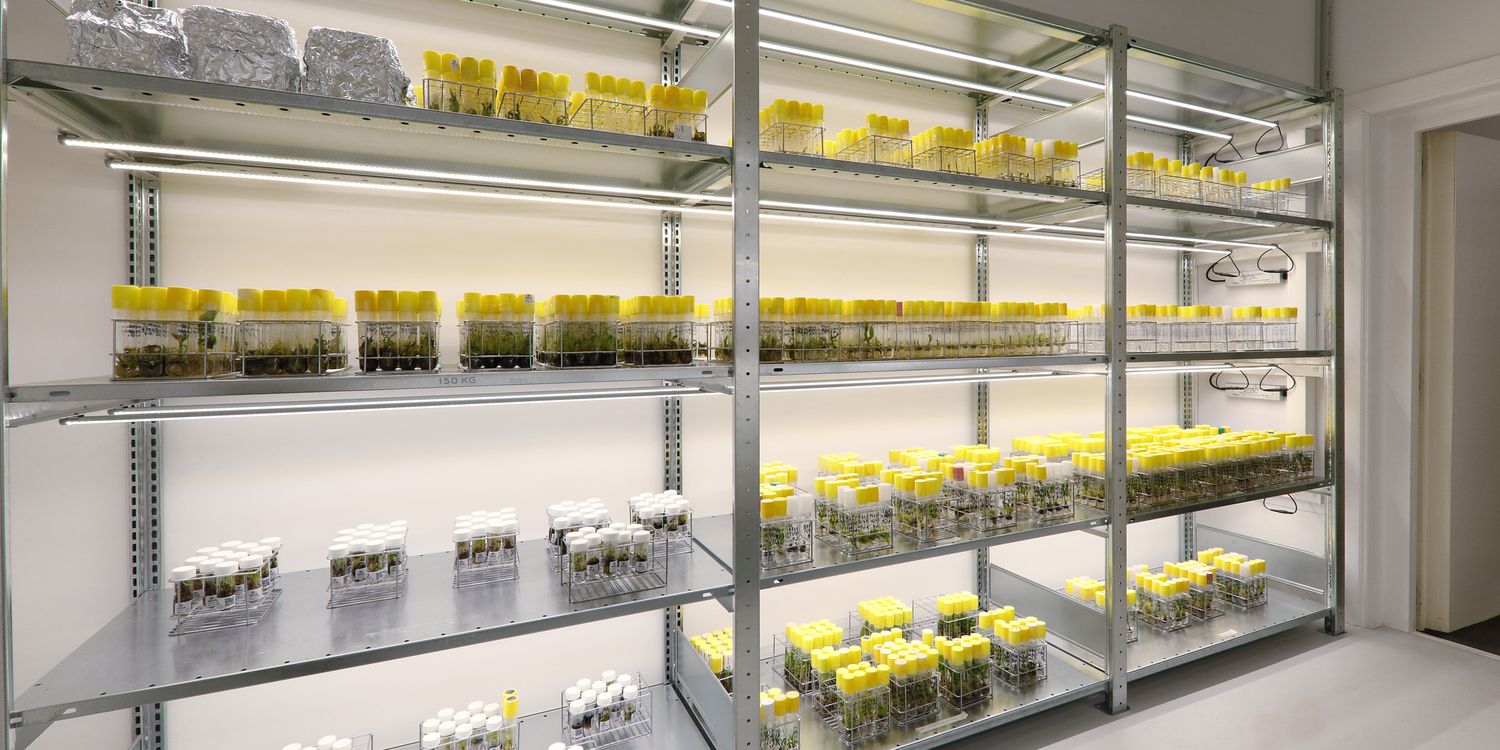
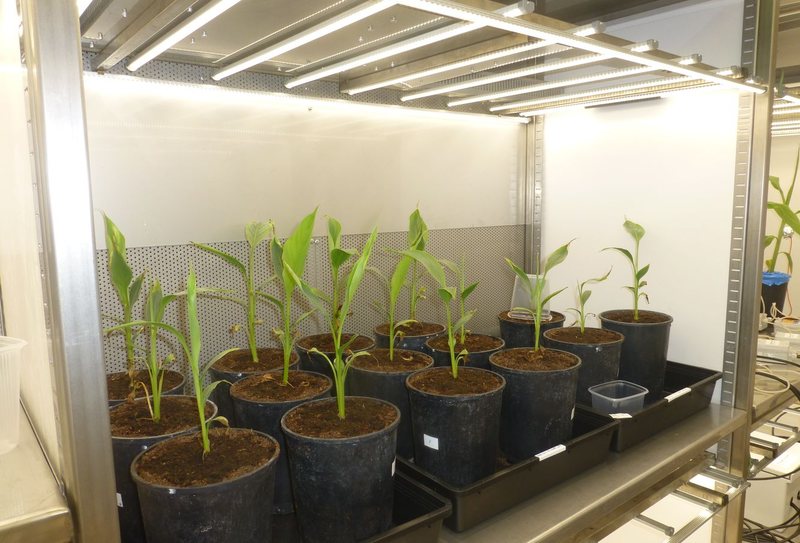
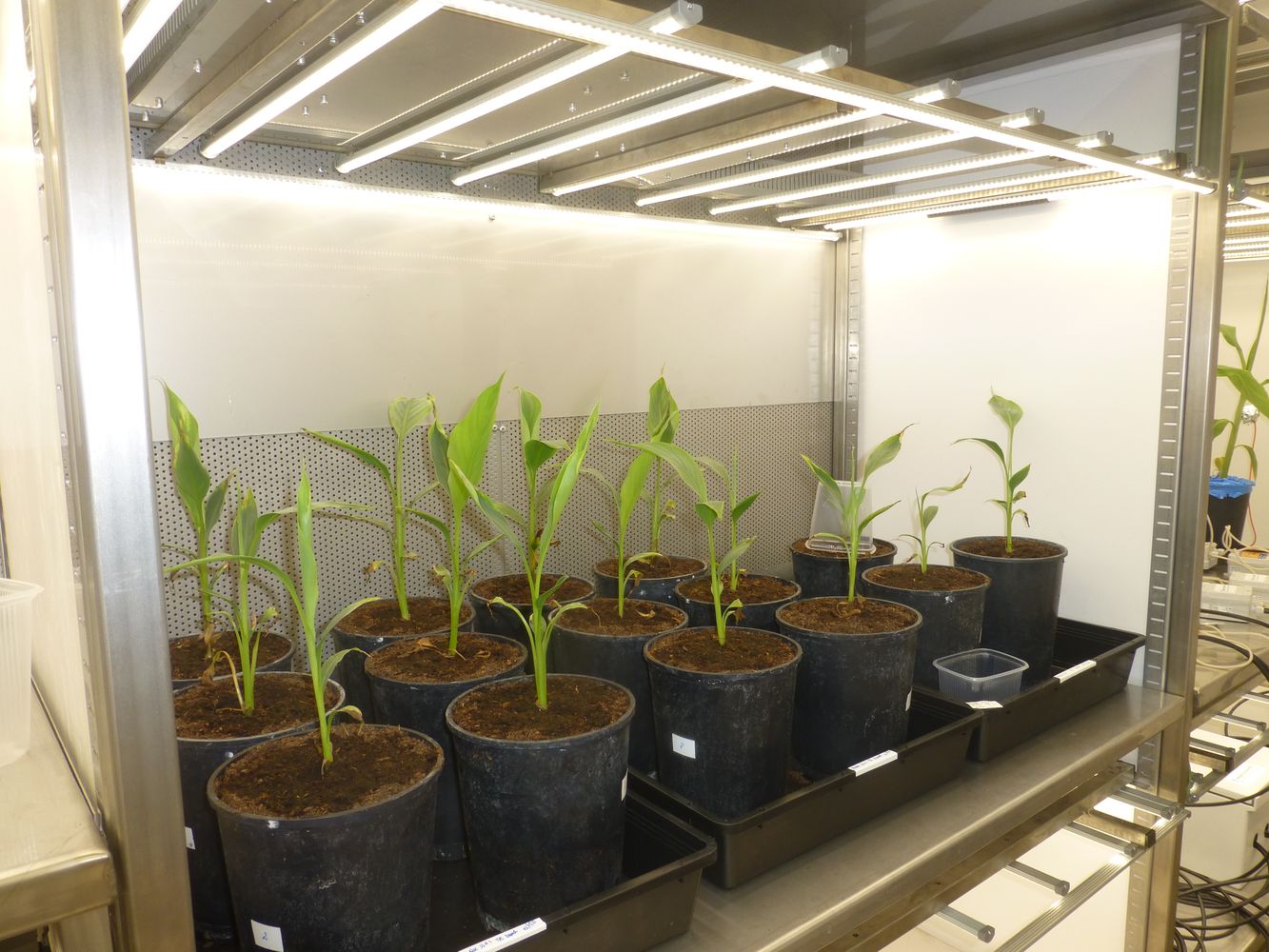
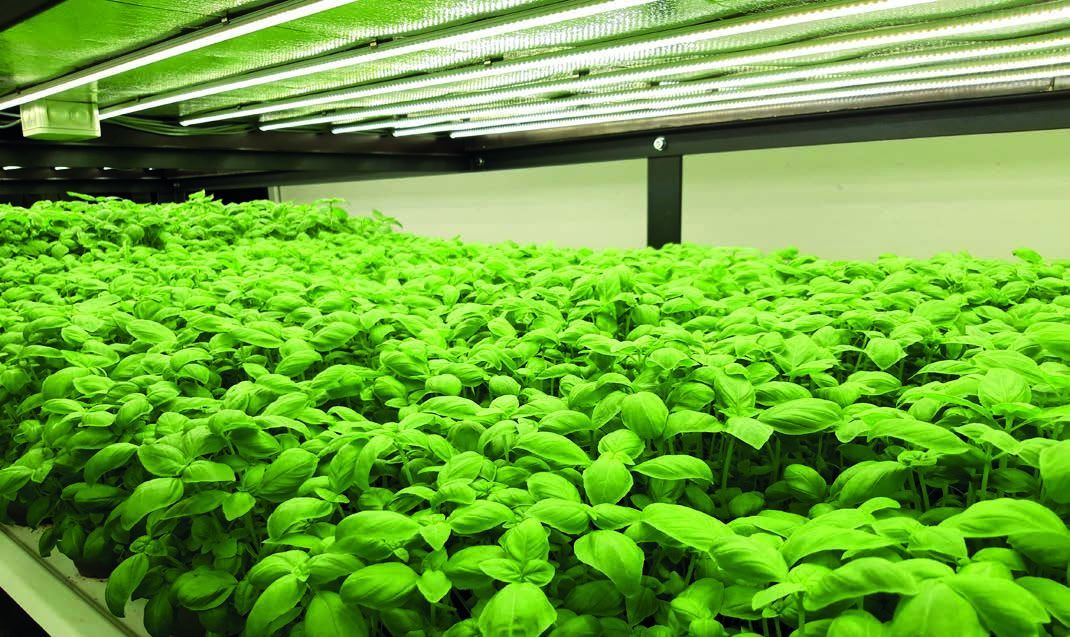
For growth chambers and phytotrons, we most often use Vegeled EOS LED rails, made to measure in Seraing up to 2 metres long. They provide uniform light at short or medium distance, come in several spectra and are dimmable (0/1-10 V or DALI). For very high uniformity at short distance, Asteria panels are an alternative.
Consumer LED grow light or professional horticultural lighting: what is the difference?
A consumer LED grow light lights a few plants with a fixed spectrum. In research, growth chambers or phytotrons, you need uniform light over the whole surface, adjustable spectrum and intensity, and stable output from one trial to the next. That is what Vegeled rails and floodlights provide.
What is the difference between a standard LED and a horticultural LED?
A standard LED is designed for the human eye. A horticultural LED is chosen for plant photosynthesis and growth: its spectrum, intensity (PPFD) and uniformity are calculated for cultivation. Vegeled rails and floodlights combine white and monochrome LEDs with controllable far red, and their light output stays stable from one trial to the next.
What power do you need for horticultural LED lighting?
Wattage alone is not enough: lighting is sized in PPFD (µmol/m²·s) at plant level. A few tens of µmol/m²·s are often enough for in vitro culture, while growth chambers and greenhouses need several hundred µmol/m²·s, for example 70 to 350 µmol/m²·s, adjustable, in the KU Leuven growth chambers. We calculate the required power for each project.
How far should LED grow lights be from plants?
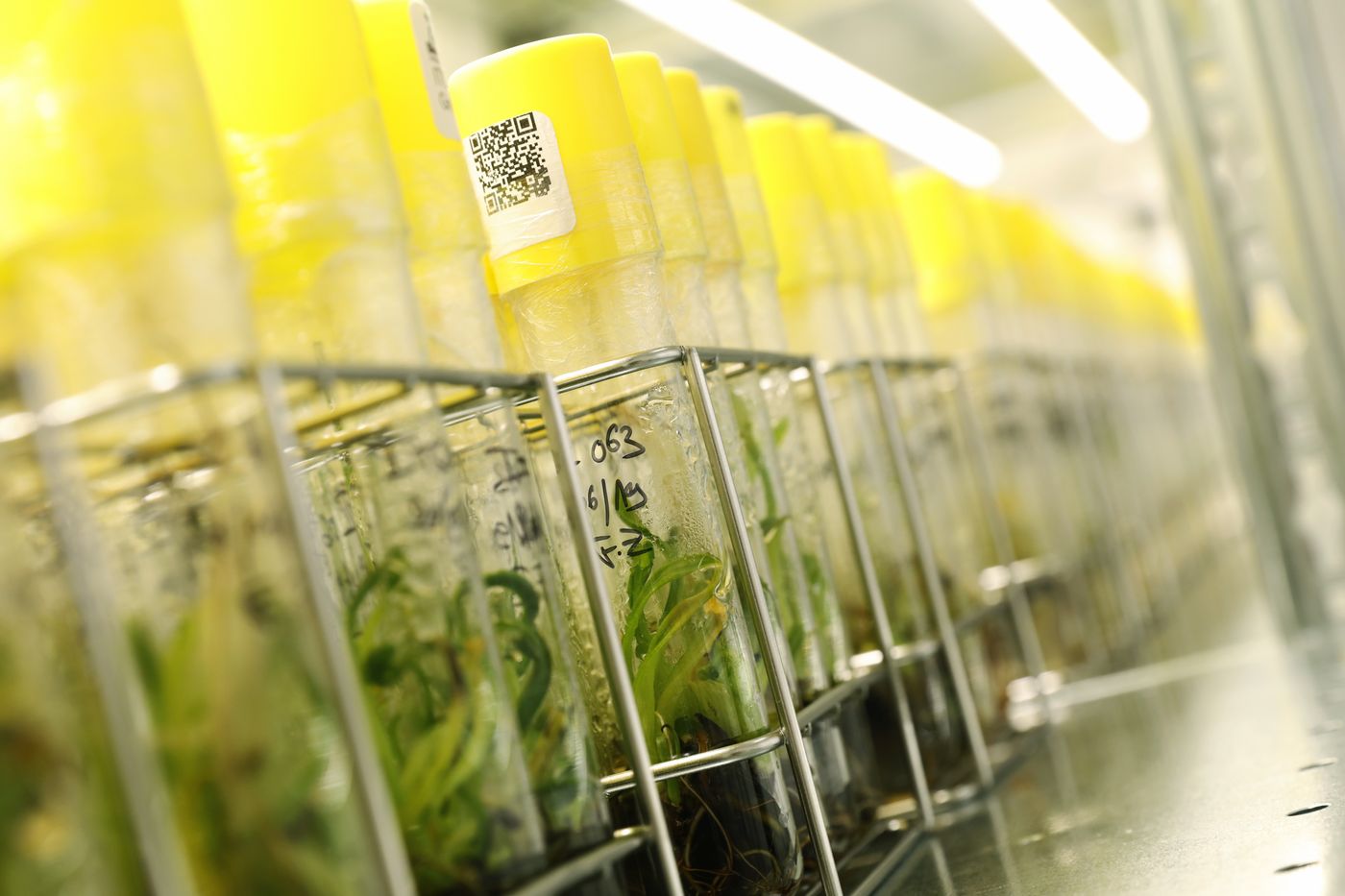
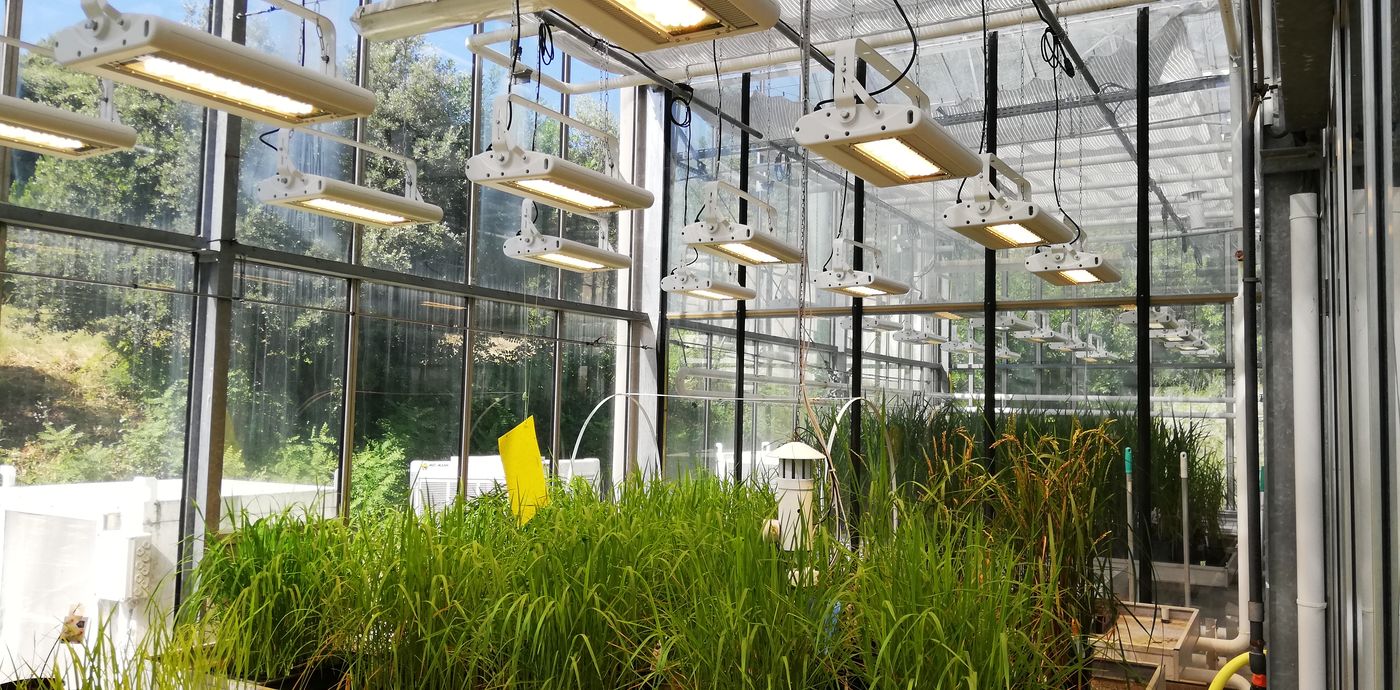
It depends on the fixture and the crop. On shelves or in in vitro culture, LED rails are placed close to the plants for uniform light. In a greenhouse, floodlights are mounted higher and their layout is calculated to avoid dark areas. We set the distance by simulation, then check the intensity on site with a spectrometer.
Can the spectrum and intensity be adjusted?
Yes. All Vegeled fixtures are dimmable. Far red can be controlled on a separate channel, and our multispectral solutions, driven by a WAGO controller, let you create your own light recipes: photoperiod, intensity and spectral colours.
What should replace HPS (high-pressure sodium) lamps in a greenhouse?
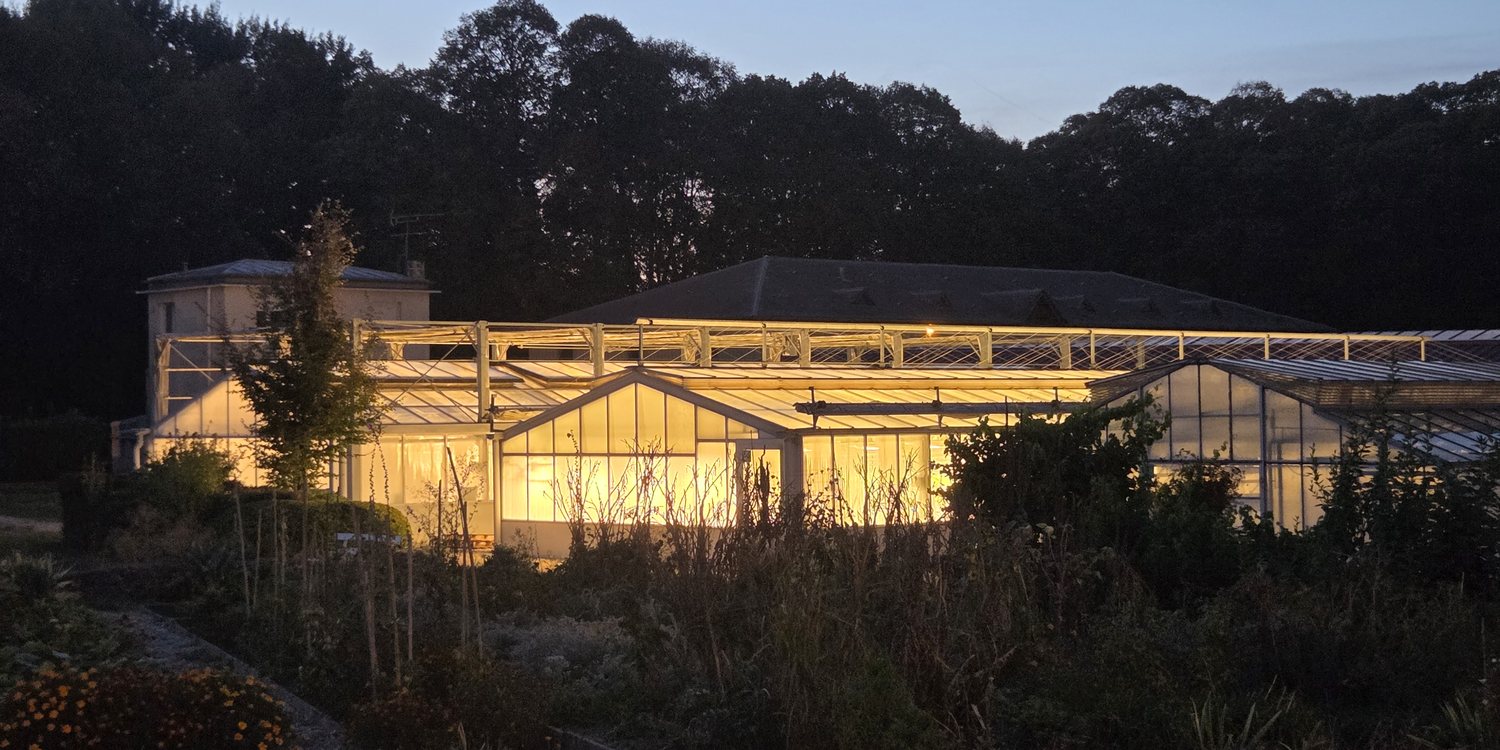
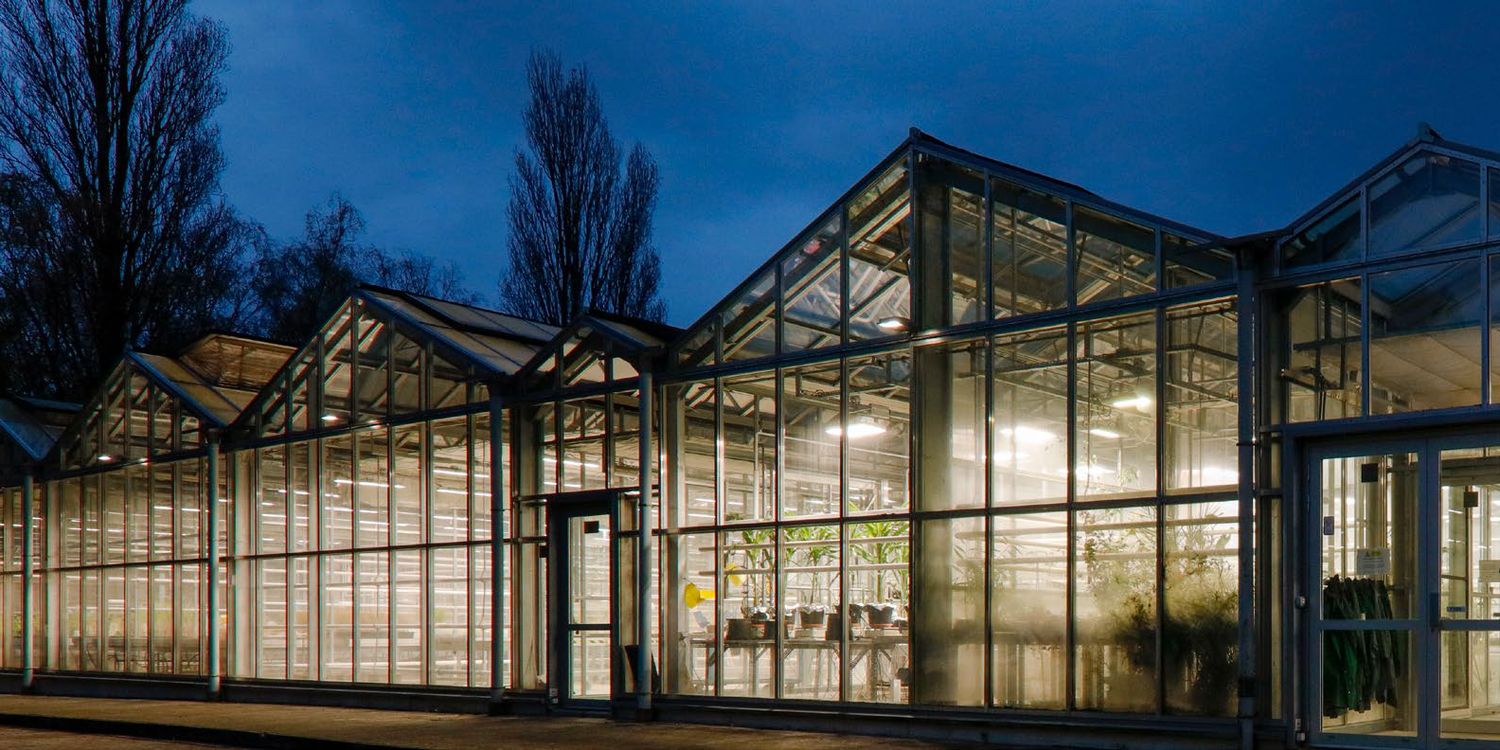
Vegeled Aurora G3 floodlights replace 400 W HPS lamps with around 30% energy savings and 10 to 20% more light. The Pandora Plus series replaces 400, 600 and 1,000 W HPS lamps with around 40% savings for the same amount of light.
Where are Vegeled products made?
Vegeled EOS LED rails are designed and made in our workshop in Seraing, Belgium. Our floodlights are assembled by our partner to specifications written by our teams, with quality control in Belgium.
Do you work outside Belgium?
Yes. Colasse equips research centres and growers in Belgium, France and worldwide, for example INRAE in Versailles, IRD in Montpellier and CEA Cadarache. We work in French, Dutch and English.